No pipes, no freestanding frame. This is a screen that mounts directly to your walls, with turf running right up to it, bottom border and all — the closest thing to actually being on the course.
This isn't a weekend project for a first-timer. It's built for people comfortable with real construction work — laser levels, anchoring into studs, demoing trim. If that's not you, our freestanding enclosure kits get you a similar experience with a much easier install.
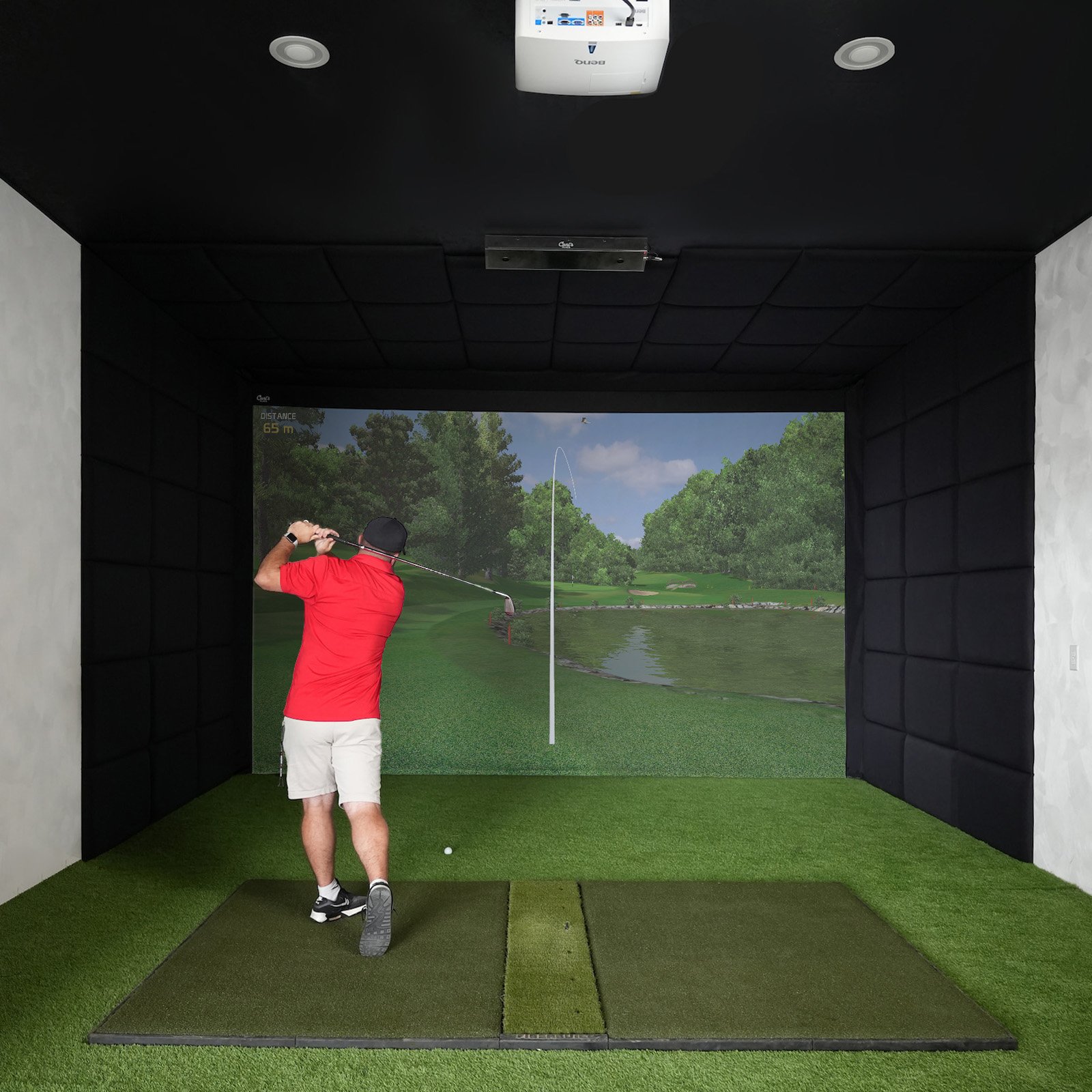
Arguably the most realistic-feeling and immersive indoor golf setup available. Once installed, it's a permanent part of the room's design — a genuine feature that can add real value to your property.
No enclosure frame eating up your room means more space for a real swing. Add some speakers and a couple of recliners and you've got a legitimate home theater on the days you're not golfing.
Padded wall and ceiling panels, adhesive acoustic tiles, retractable curtains, or your own DIY solution — pick whatever protects the space the way you want it protected.
For the built-in screen itself, you'll need to:
For padded wall and ceiling panels, you'll also need to:
If any of this sounds out of your league, that's genuinely fine — check out our freestanding enclosure kits instead. Everything you need in an easy-to-assemble kit, no wall modifications required.
We recommend standing at least 10 ft from the screen, with 7 ft of swing room in every direction.
Start with Carl's Built-In Screen, then choose how to finish your walls and ceiling.
Wall-to-wall screen with no bottom border. No pipes needed — gives DIYers full flexibility on how to protect walls and ceiling themselves.
Adhesive-backed tiles for a sleek, professional finish. Two types available — budget-friendly wall tiles or thicker acoustic tiles for better sound absorption.
Heavy-duty curtains that block ambient light, with reinforced grommets and a weighted bottom. Pull out to play, drag back for access.
The most protective option. Custom-sized foam-and-fabric panels attach with French cleats and Z-clips for maximum wall and ceiling protection.
Tell us about your space and we'll help you land on the right option — no pressure either way.
 My Golf