Engineered to handle 250 mph screamers without flinching — available in four materials, three finishing styles, and sizes to fit almost any projected image. Whether you're replacing a worn screen or starting from scratch, we'll get you the exact spec at real retail pricing.
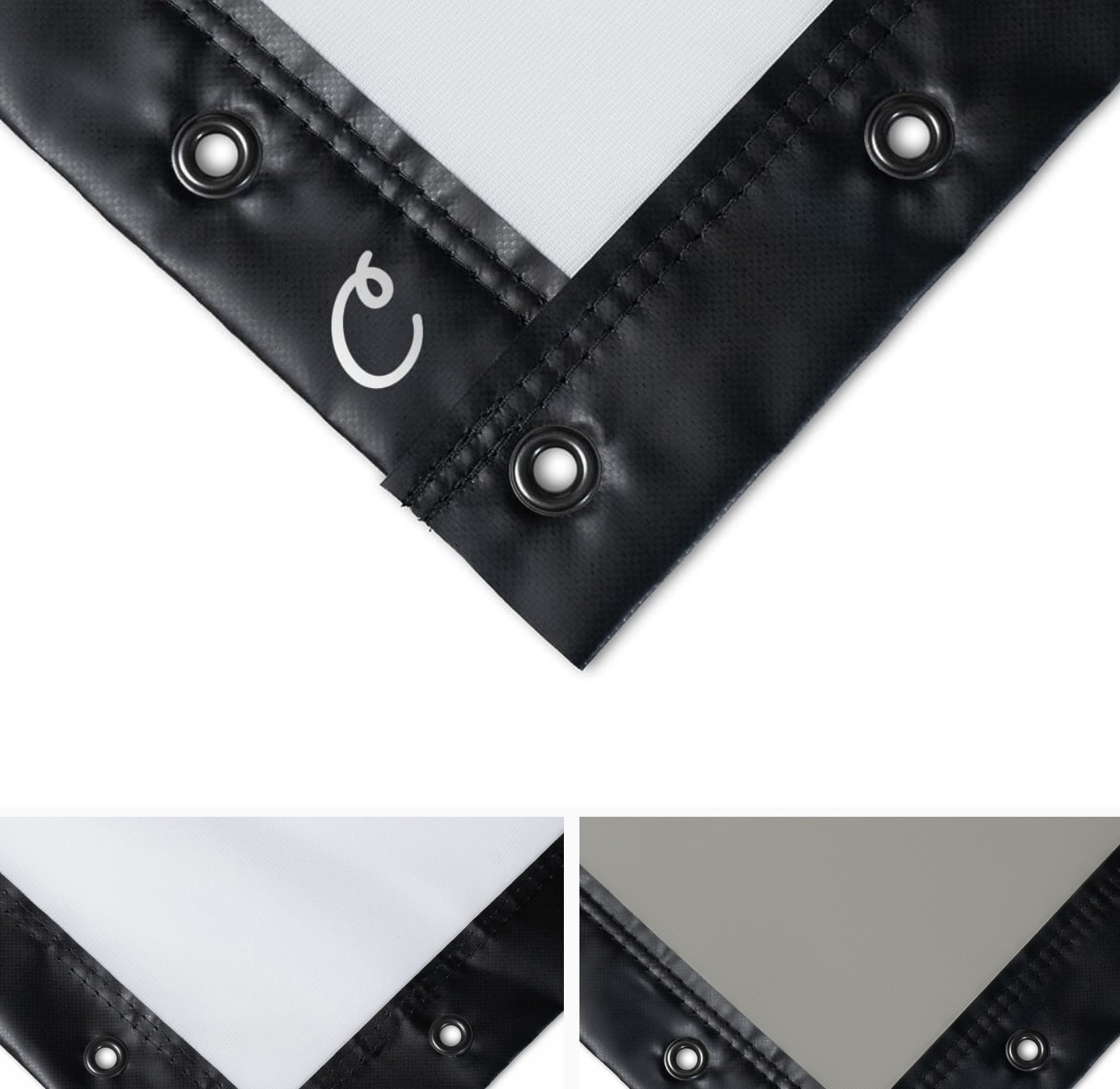
Every material is engineered to take repeated full-speed shots without sagging, tearing, or losing image quality over time.
The reliable, budget-friendly starting point — solid image quality and the durability to handle daily use.
A step up in image clarity and color accuracy, still priced for the everyday home simulator build.
Our sharpest, most vivid image quality — the choice for builds where picture quality is the priority.
Deeper blacks and better contrast for rooms with ambient light you can't fully control.
All three finishing styles are available across every material and size — pick whichever matches how your enclosure or frame is built.
Between 4 screen materials, 3 finishing styles, and 30 available sizes, there are 360 individual price points — and we price every one of them to match genuine retail price exactly, not a markup. Rather than risk a stale or mistyped number, pick your material, finish, and size below and request pricing — we'll get you the exact, current price within one business day, same as we would for a custom enclosure quote.
Pick your material, finishing style, and size below. We'll check current pricing for your exact combination and get back to you within one business day.
Pick a material, finishing style, and size to request pricing.
It comes down to how often you're hitting driver versus irons, and how much natural or projector light is in the room. Heavier, denser materials handle repeated full-speed impacts better and last longer, while lighter materials are more budget-friendly for wedge and iron-heavy practice. We'll walk through your actual usage with you rather than just upselling the priciest option.
Yes — finish affects both brightness and contrast. A brighter white finish reflects more projector light back at you, which helps in rooms that aren't fully dark, while gray finishes tend to produce deeper blacks and better contrast in a properly darkened room. It's a real tradeoff, not just a color choice.
With normal recreational use, most quality screens hold up for several years before the fabric shows wear at the impact zone. Heavy daily use, especially with a lot of driver swings, will shorten that. The 250 mph impact rating is about surviving individual hits, not an indicator of total lifespan.
In most cases, yes. Impact screens are typically sized to match standard enclosure frame dimensions, so if your frame is still solid but the screen has worn out or developed holes, swapping just the screen is usually the more economical move rather than replacing the whole setup.
The finishing style affects how the screen mounts and tensions to your frame — some use grommets and bungee cords for adjustable tension, others use sewn pockets or hook-and-loop edges for a cleaner look. The right one depends on your specific enclosure frame and how much fine-tuning you want over screen tightness.
 My Golf